Tables
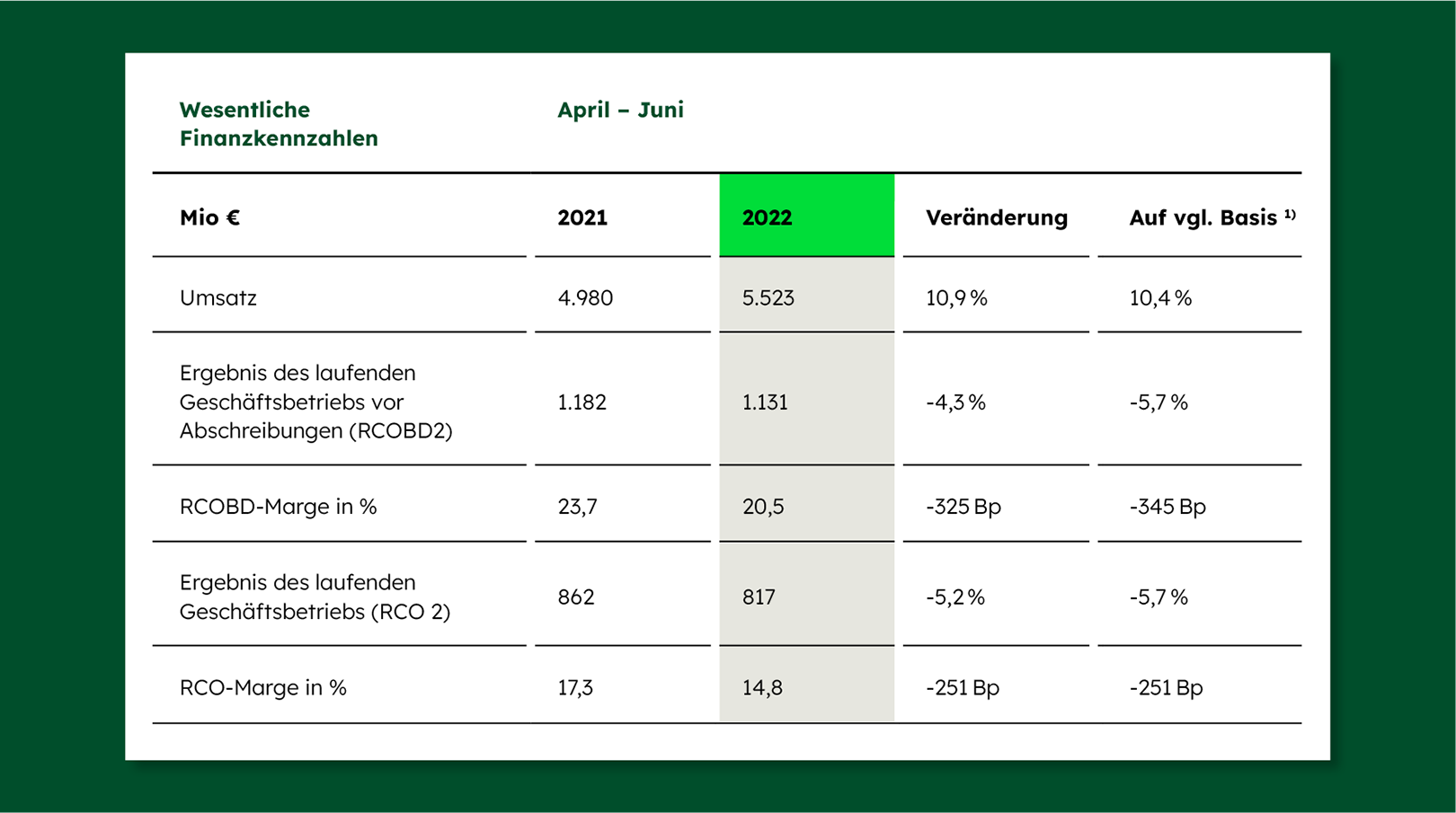

Style
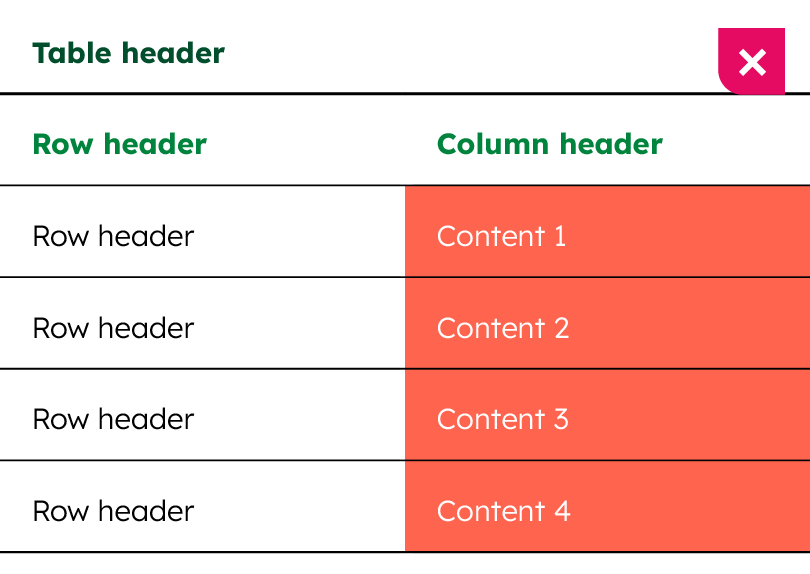
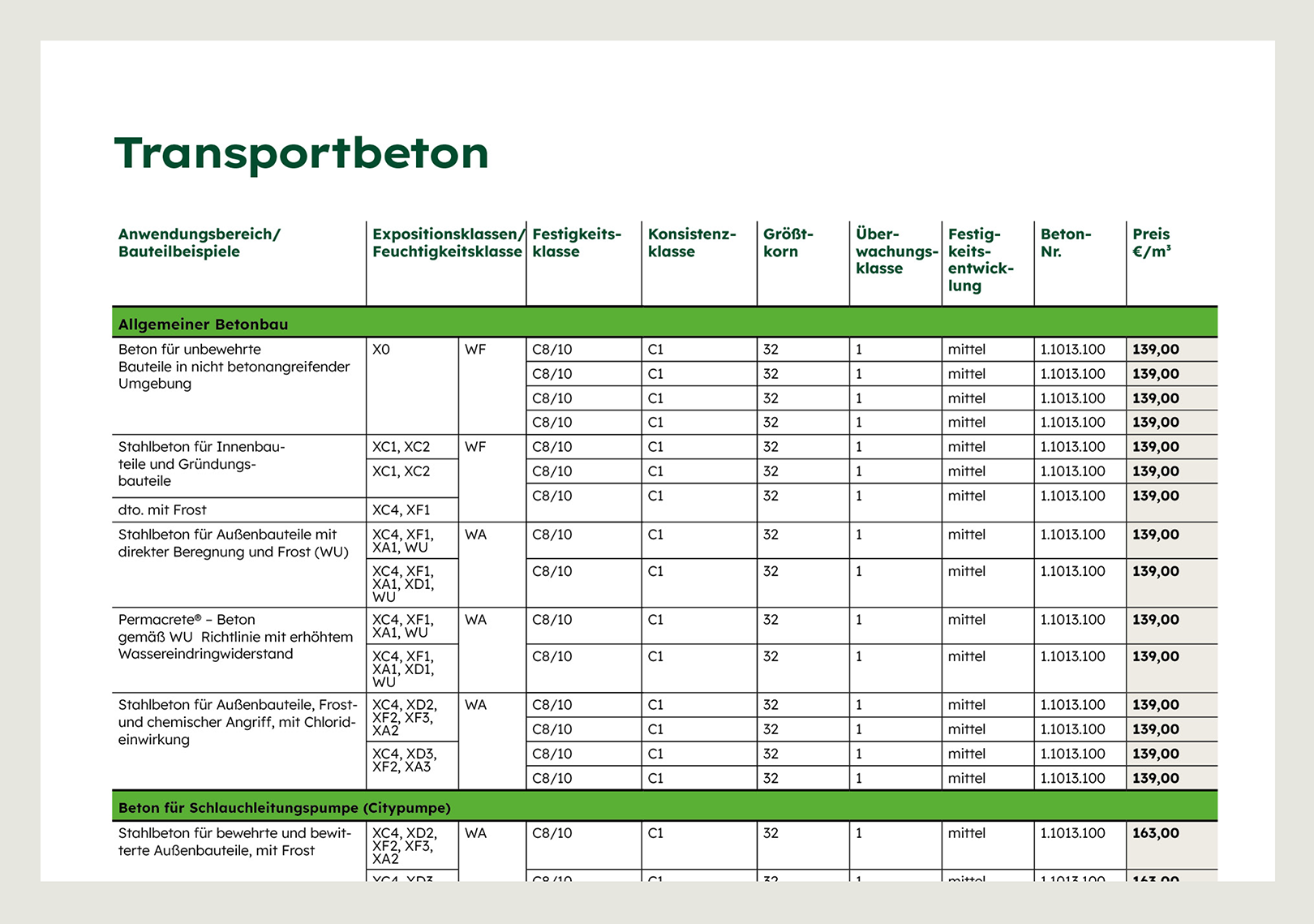
Tables should be clearly structured and kept as simple as possible. For more complex tables, you can use colour fills. Keep enough space between positions so they are easy to read. Use the same font size throughout the whole table, if possible. Our typography principles apply to all text.
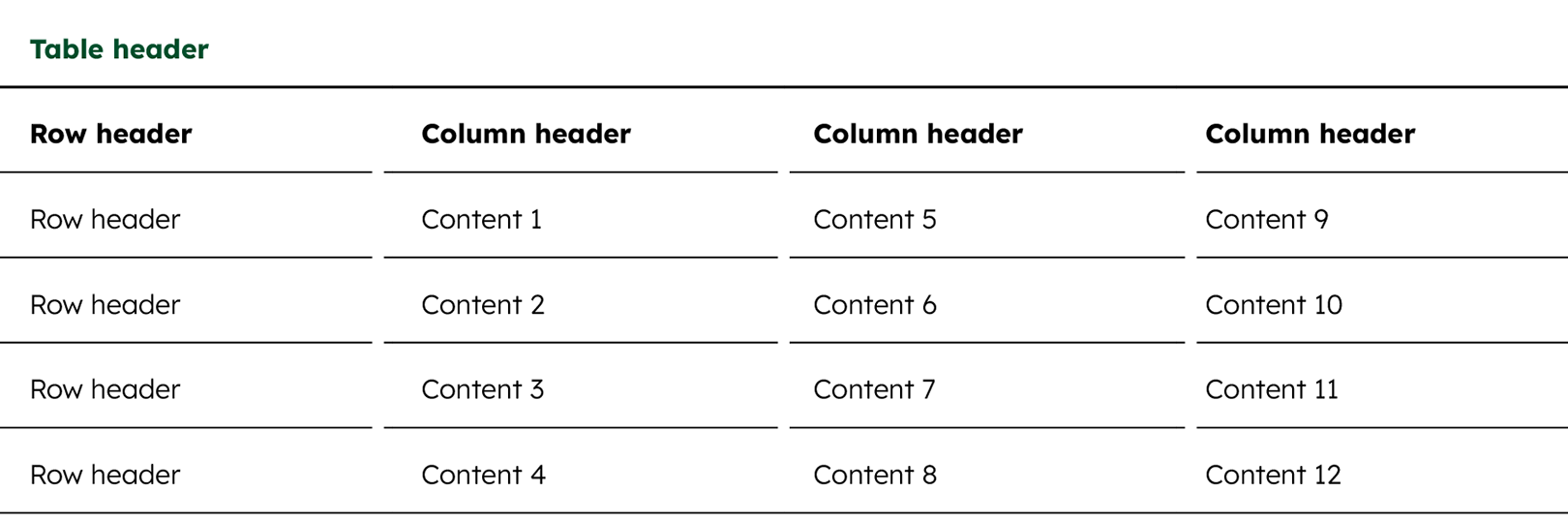

Typography
For both header and subheaders, we use Lexend Bold. For copy text, we use Lexend Light.
The font is always set in black, except for the header.
Horizontal lines
Horizontal table lines in Black are used for each cell for a clean structure. The first line is always slightly stronger than the lower lines. In this example, it is 1.25 pt and 0.75 pt. The thicknesses should be chosen according to legibility and even numbers. We forego vertical lines, if possible – in very complex tables, they have the same appearance as the horizontal lines.
Highlighting cells
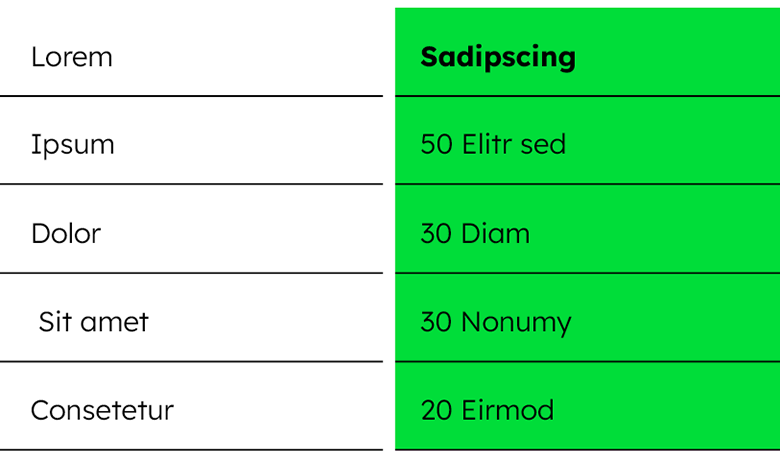
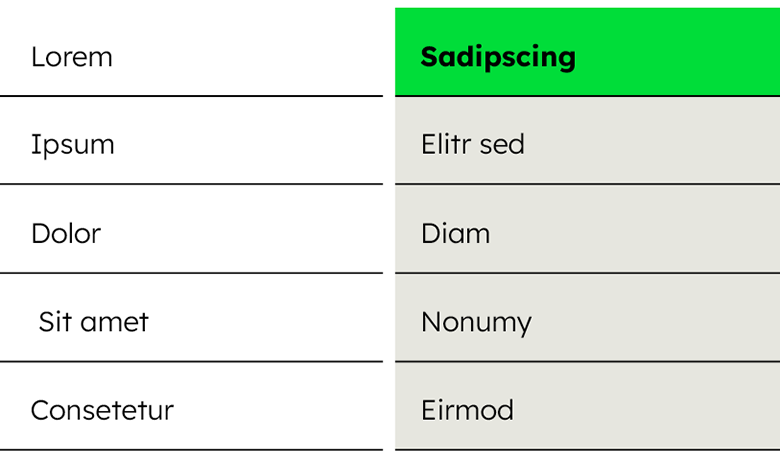
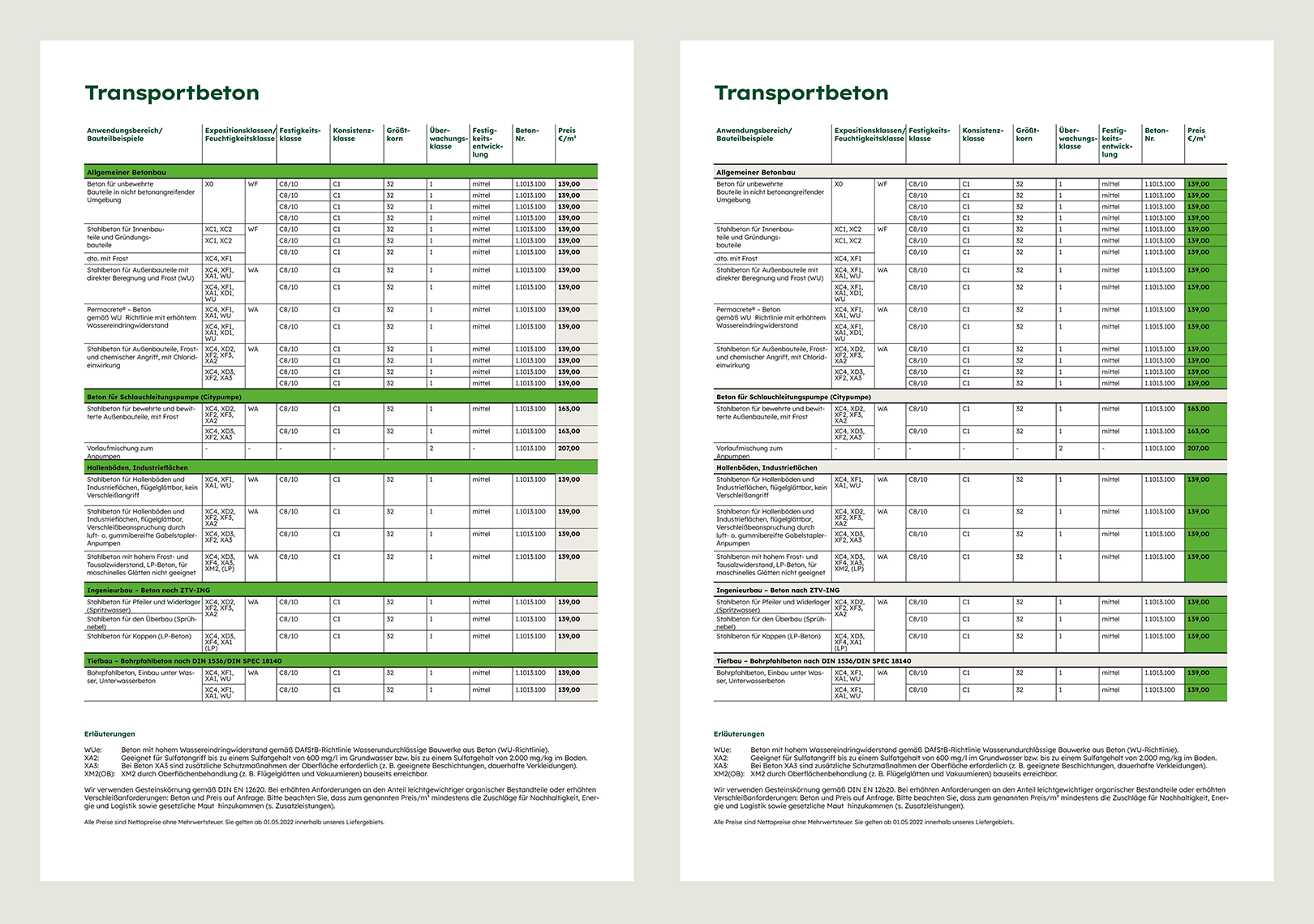
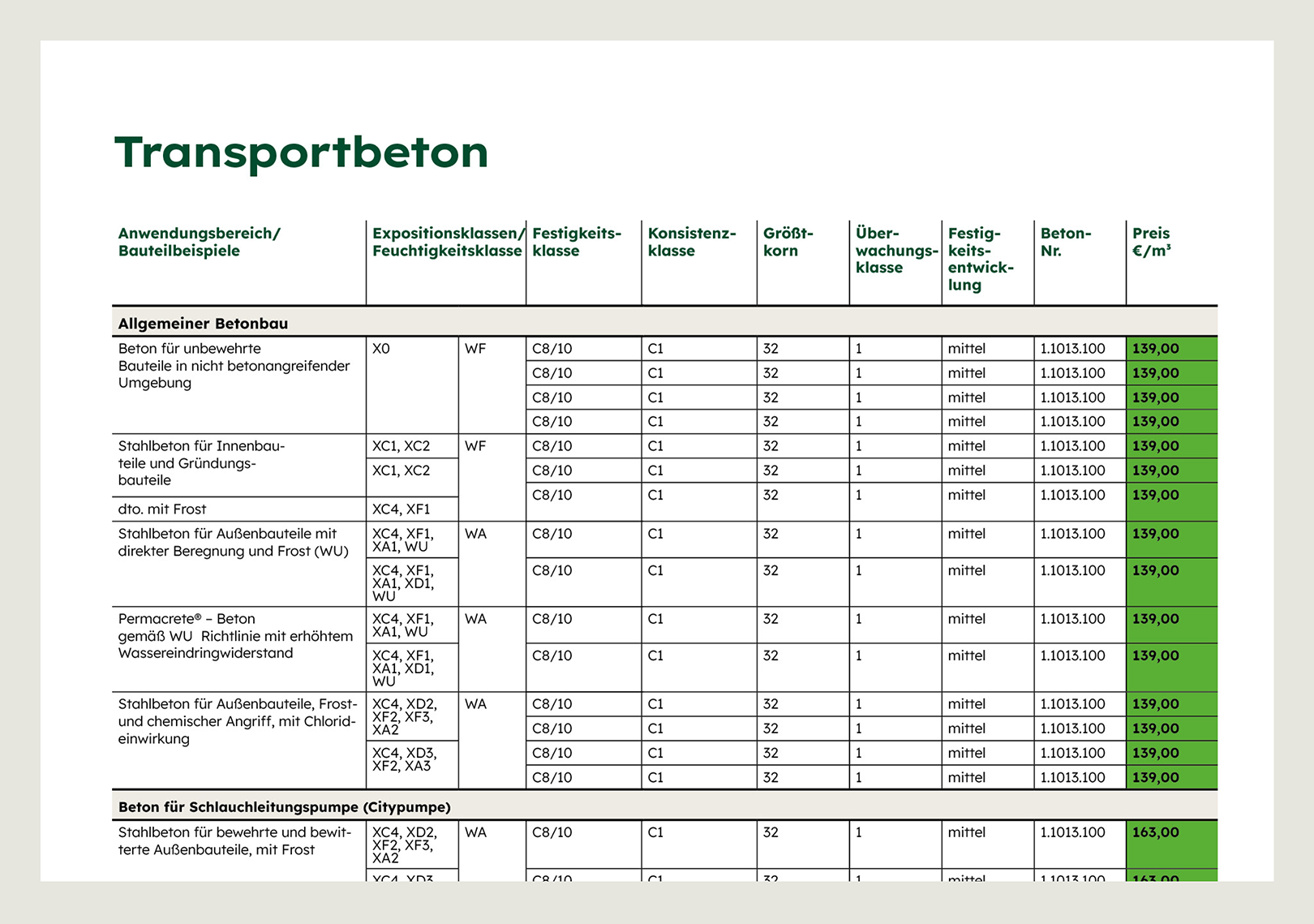
You can highlight cells or even full rows and columns in Bright Green. You may also supplement Sandy Grey. The text colour on Bright Green should always be Dark Grey or Black.


Bright Green 100%
HEX: #00DD39
RGB: 0 | 221 | 57
CMYK: 68 | 0 | 98 | 0


Sandy Grey
HEX: #E6E6DF
RGB: 230 | 230 | 223
CMYK: 0 | 0 | 5 | 10


Colouring rows (optional)
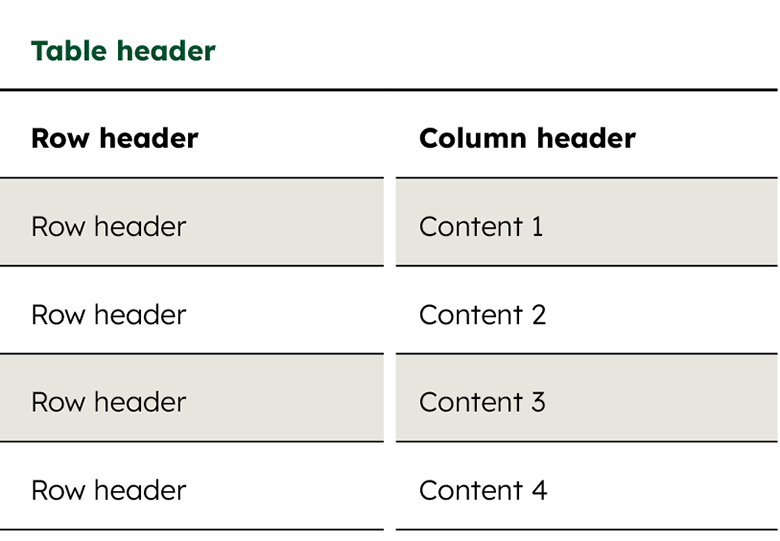
Colouring every other row in Sandy Grey can further increase readability.

Other backgrounds (exceptional case)
Our tables should generally be presented on a white background. In exceptional cases, they may be shown on a Sandy Grey or Deep Green background.

Sandy Grey background
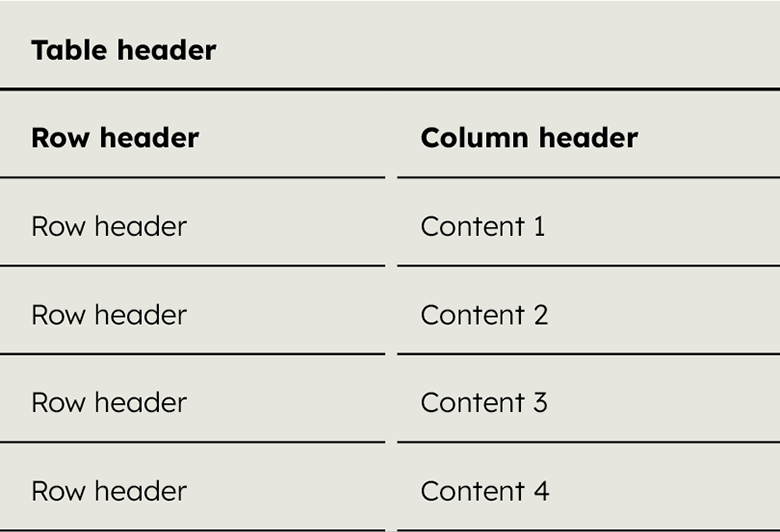
As an additional option for layouts, tables may be presented on a Sandy Grey background. In this case, Sandy Grey may not be used for colouring cells.

Deep Green background
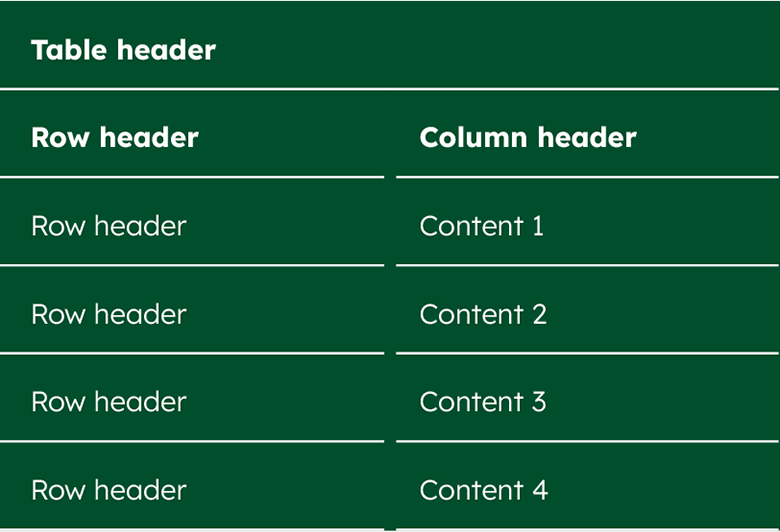
For eye-catching presentations, tables may be presented on a Deep Green background. Text and lines are to be in White. Header and subheader fills are to be avoided in this case.
Don’ts


Tables in use



Any questions about our guidelines? Contact us.
- N Support
- T + 49 211 690787-200
- E support@Brandhub.heidelbergmaterials.com